TAG WHAT MATTERS
Endogenous tags for visualization, quantification, purification, and degradation.
Why Endogenous Tagging Matters
Most tagging strategies rely on plasmid-based expression or bulky protein fusions. While easy to deploy, these systems introduce artifacts, mislocalization, and variability.
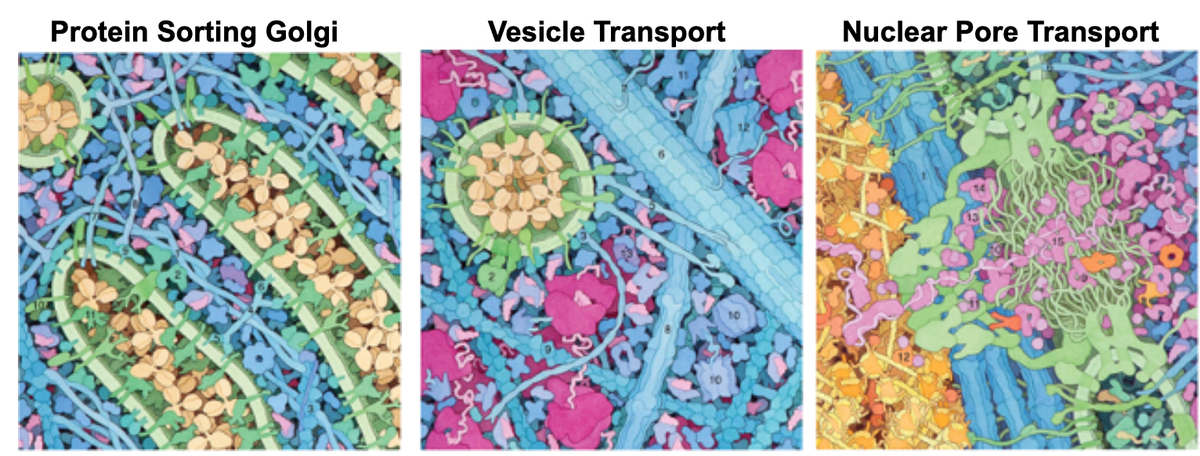
Most of us were first taught biology with simplified analogies: a cell as an egg, organelles as little compartments, proteins floating freely like beads in a jar. But this isn’t how biology actually works.
Inside a living cell, there is no unused space.
Proteins are packed shoulder-to-shoulder, interacting, binding, and competing in a tightly regulated choreography. The Golgi is not just a stack of membranes, it’s a dense sorting hub where enzymes, scaffolds, and trafficking proteins work together with exquisite precision. Vesicle transport isn’t just “bubbles moving cargo”, it’s a motor-driven logistics network that relies on coat proteins, adaptors, receptors, and cytoskeletal highways. And the nuclear pore is not a hole, it is one of the largest protein assemblies in the cell, made of hundreds of subunits that control every molecule entering or exiting the nucleus.
This level of complexity matters. In an environment this crowded and dynamic, biology is highly sensitive to perturbation. Overexpression models, bulky tags, or artificial constructs can easily distort natural interactions. A small change to a protein’s size, localization, or stability can ripple across entire pathways.
That’s why precision engineering is foundational to our approach.
By integrating small functional tags directly at the endogenous locus, without disrupting expression, folding, or trafficking, we create models that behave the way real proteins behave inside real cells. In a system this dense and coordinated, precision isn’t optional. It’s the difference between getting noisy artifacts… and uncovering biology as it actually operates.
Precision in, precision out. That’s what lets our tagging strategy deliver real insights from this complexity.
EditCo delivers small, functional tags precisely inserted at endogenous loci, unlocking:
- True biological behavior — no artificial overexpression
- Reliable reproducibility — sequence-verified, stable integration
- Cleaner workflows — compatible with fluorescence, luminescence, and antibody systems
Endogenous tagging provides a unified, reproducible way to quantify, visualize, purify, and study protein turnover, without compromising biology.
The Four Pillars of Protein Tagging
A flexible tagging platform built for every assay.
Different biological questions require different functional readouts, and no single tag can answer them all. That’s why EditCo’s tagging strategy, powered by our cell engineering platform, is built around four foundational pillars: Visualization, Quantification, Purification, and Degradation.
Each pillar represents a distinct way to interrogate proteins inside their native environment, and each relies on tags designed to preserve biological fidelity while revealing specific mechanistic insights.
| Pillar | Biological Question | Tag Modalities | Representative Examples | Why Endogenous Matters |
|---|---|---|---|---|
| Visualization | Where is the protein, and how does it move within the cell? | Fluorescent tags, covalent labeling tags | HiBiT, HaloTag, GFP, mCherry | Preserves native folding, localization, and trafficking in crowded cellular environments |
| Quantification | How much protein is present, and how does it change over time? | Luminescent or enzymatic reporters | HiBiT, NanoLuc | Signal reflects true biological change, not expression noise or transfection efficiency |
| Purification | What does the protein interact with, and in what stoichiometry? | Epitope tags, affinity tags, enzyme tags | HiBiT, FLAG, HA, Myc, ALFA | Captures native complexes, PTMs, and physiologic interaction partners |
| Degradation | When and how is the protein removed from the system? | Ligand-inducible handles | HaloTag-based dTAG / HaloPROTAC systems | Enables precise temporal control at endogenous expression levels |
1. Visualization
See proteins in the context of their native environment.
In a cell as crowded and structured as the Golgi, ER, cytoskeleton, or nucleus, localization is more than just “where a protein is.” It’s a proxy for function, interaction partners, trafficking state, and signaling logic. Disrupting localization, even subtly, can fundamentally rewrite a protein’s role.
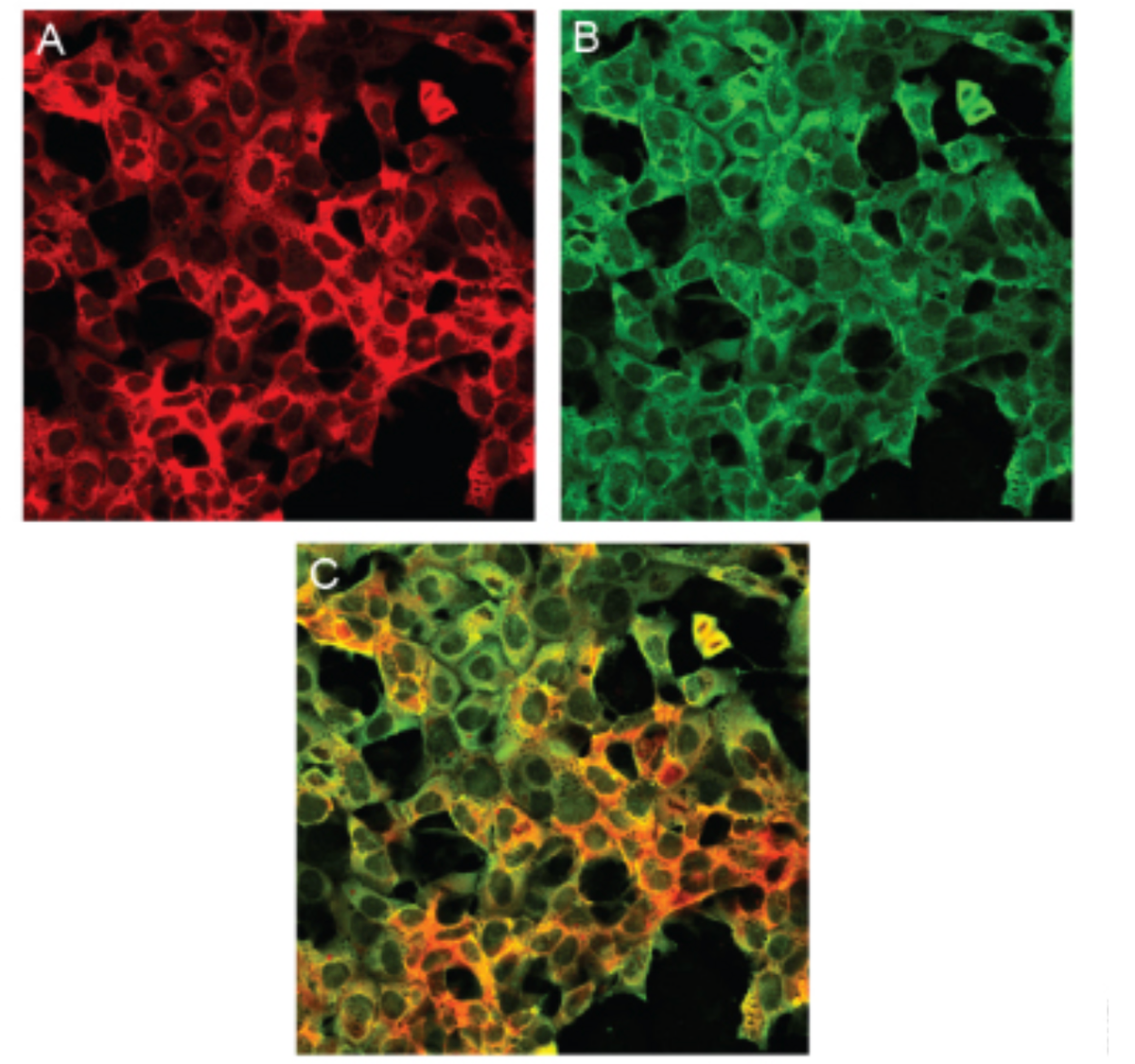
Endogenous luminescent, fluorescent, and covalent tags allow you to visualize proteins exactly where they operate, without the mislocalization, aggregation, or artifacts often introduced by overexpression or oversized fluorescent fusions.
With precise HiBiT, GFP, mCherry or your florophore of preference knock-ins, you can track:
- How proteins move through organelles
- How trafficking adapts to perturbations
- How spatial relationships influence pathway logic
- How dynamic environments reshape protein functionality
Visualization isn’t just about seeing, it’s about understanding structure, context, and temporal behavior inside the molecular city of the cell.
2. Quantification
Turn cellular behavior into measurable, dynamic data.
In biology, abundance is not static, proteins are synthesized, modified, transported, activated, and degraded continuously. To understand mechanism, you need a readout that reflects real-time kinetics, not endpoint snapshots.
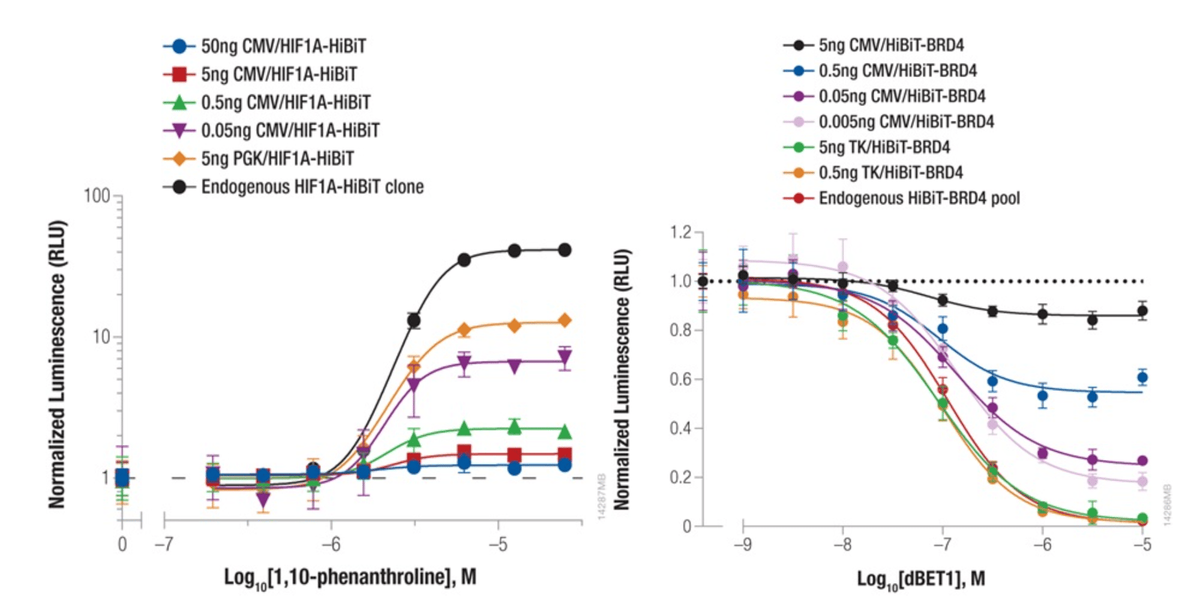
Endogenous luminescent tags like HiBiT and NanoLuc transform protein abundance into precise, quantitative signal. Because the tag sits directly at the native locus, every change in signal corresponds to a true biological event, not variations in transfection efficiency or expression noise.
This enables:
- Live-cell kinetic measurements with second-level temporal resolution
- Direct monitoring of protein stabilization or destabilization
- Real-time response profiling across perturbations
- High-throughput screening with quantitative confidence
Quantification is the foundation of mechanism-of-action, dose-response, and temporal biology. In a system where everything is in motion, dynamic measurement is essential.
3. Purification
Pull down the proteins that matter, without rewriting their biology.
When proteins exist in dense molecular ecosystems, interactions and stoichiometries are exquisitely sensitive. Overexpressing tagged proteins can overwhelm complexes, disrupt binding equilibria, or artificially create new interactions that never occur in vivo.
Endogenous epitope tags, such as HiBiT, FLAG, HA, and Myc, allow researchers to isolate proteins exactly as they exist in living cells: native partners, natural post-translational modifications, real stoichiometries, and physiological abundance.
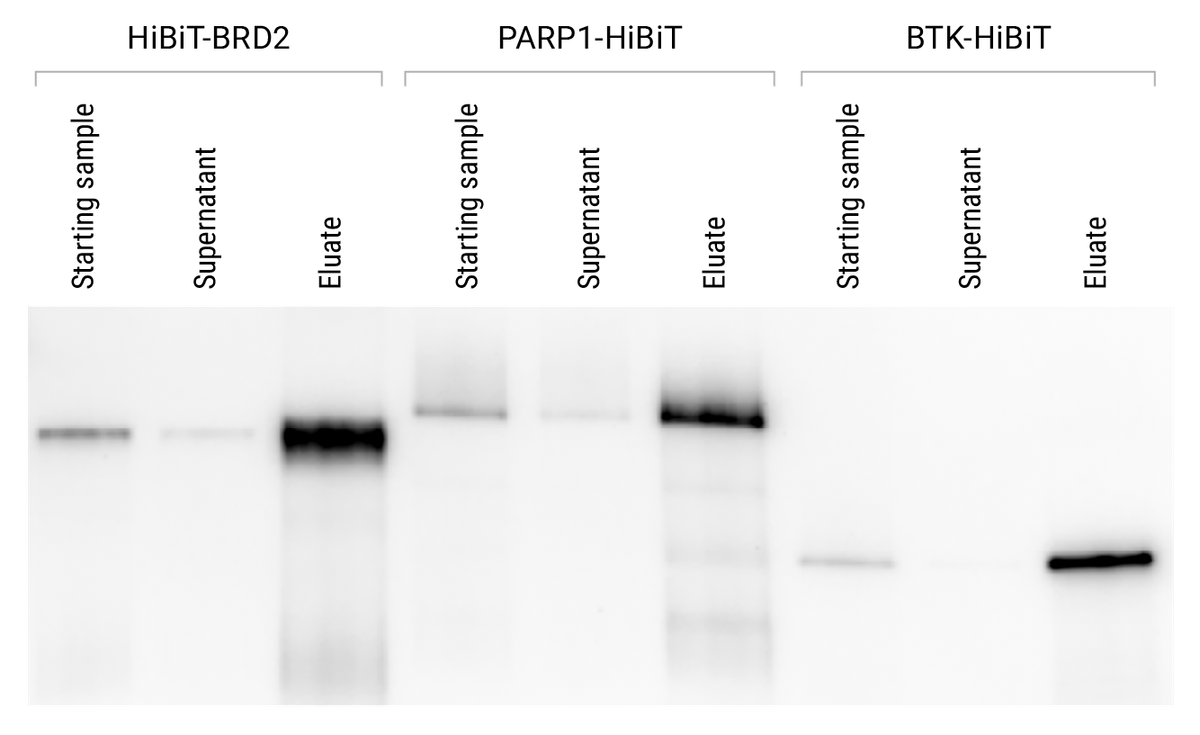
With endogenous purification tags, you can:
- Perform IP and Western blotting without overexpression artifacts
- Capture real interaction partners and avoid non-physiologic complexes
- Study proteoforms and modification states as they naturally occur
- Generate clean biochemical datasets grounded in native biology
Purification isn’t just for confirmation, it’s a window into true molecular architecture.
4. Degradation
Control protein stability with precision-engineered degradation tags
Protein degradation systems like dTAG and HaloPROTAC rely on exquisitely tuned molecular interactions. To work effectively, the degradation handle must be small, accessible, and correctly folded, at the protein’s native expression level.
Overexpression-based dTAG constructs or large fusion proteins often misfold, mislocalize, or compete with endogenous protein, leading to misleading degradation profiles.
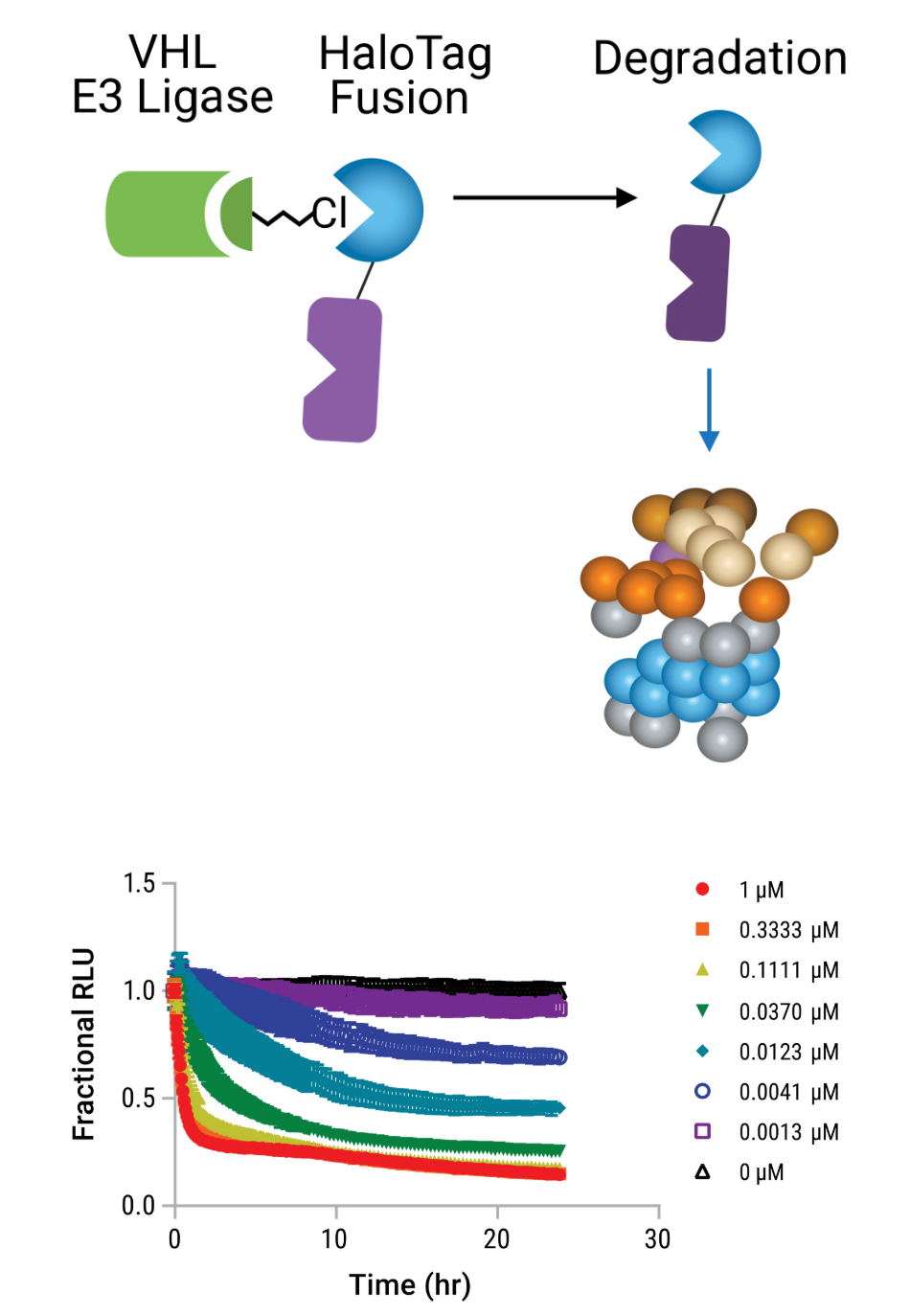
By integrating HaloTag directly at the endogenous locus, EditCo enables true conditional degradation that reflects real biology, not an engineered artifact.
Endogenous HaloTag allows researchers to:
- Induce rapid, selective degradation with high temporal precision
- Compare KO vs conditional degradation in the same genetic background
- Study stability, rescue, and turnover mechanisms in native context
- Evaluate degrader potency and selectivity without expression noise
Degradation is one of the most powerful ways to probe causality in biological systems — and endogenous HaloTag models bring that power firmly into the realm of translational relevance.
Case Study Highlight
Visualizing the Role of PARP7 in Innate Immunity
Endogenous HiBiT knock-ins enabled real-time visualization and quantification of PARP7 expression dynamics in immune signaling pathways. By preserving native regulation, this approach revealed how PARP7 abundance and localization change during innate immune activation, insights that are often obscured by overexpression-based models.
Reference: Duell AK, Sanderson DJ, Cohen MS. Quantification of PARP7 Protein Levels and PARP7 Inhibitor Target Engagement in Cells Using a Split Nanoluciferase System. Methods Mol Biol. 2023;2609:387–395. doi:10.1007/978-1-0716-2891-1_24. PMID 36515849.